The Quiet Investment: How Robertsonville's Veterans Are Guiding the Next Wave
Nobody handed Marcus Tillman a roadmap when he started his landscaping company at 24. He figured most of it out the hard way — wrong hires, a contract that nearly broke him, a summer where he wasn't sure he'd make payroll. What turned things around wasn't a business course or a bank loan. It was an older guy named Ron, a retired contractor who'd seen Marcus sweating over a broken mower in the parking lot of a hardware store and struck up a conversation.
"He didn't try to take over," Marcus says. "He just kept asking me questions until I figured out the answers myself. That's a skill. Not everybody has it."
That kind of relationship — low-key, unscheduled, built on mutual respect rather than formal obligation — is more common in Robertsonville than most people realize. And it's doing more for the town's future than a lot of the louder initiatives ever will.
Not a Program. A Pattern.
There's no official mentorship bureau in Robertsonville. No app, no matching algorithm, no certificate of completion. What exists instead is something messier and arguably more effective: a culture of experienced locals who've decided, more or less on their own, that helping younger residents figure things out is worth their time.
Some of these relationships start at the Chamber of Commerce mixers. Others grow out of church committees, recreational sports leagues, or the kind of small-town proximity that means you keep running into the same people at the same places until a real conversation finally happens. A few get started because someone was bold enough to send a cold email — and someone else was generous enough to actually respond.
What they share is a certain informality. Nobody's tracking outcomes. Nobody's filing reports. The value is harder to measure than a grant program, but the people involved will tell you it's real.
Coffee Is the Currency
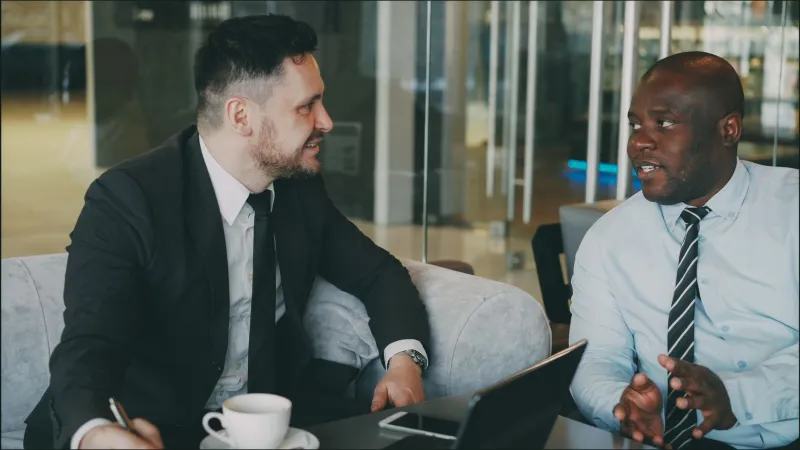
Ask around and you'll hear a version of the same story over and over. A young professional, new to a field or newly serious about their ambitions, gets connected — through a friend, a parent, a lucky introduction — with someone who's been around long enough to have made most of the obvious mistakes already. They meet for coffee. Then they meet again. A text thread develops. Somewhere in there, things shift.
Diana Cho, who now runs a small marketing consultancy out of a renovated space on Elm Street, traces her entire professional trajectory back to a single breakfast with a woman who'd been running a local PR firm for two decades. "She didn't sugarcoat anything," Diana says. "She told me what clients would be nightmares, what pricing signals you're serious, and why I needed to stop apologizing at the beginning of every email. I use that stuff every single week."
That kind of practical, unvarnished guidance is what separates a real mentor from someone who just offers encouragement. Robertsonville's most effective mentors seem to understand the difference intuitively. They're not cheerleaders. They're people who've earned the right to tell you what's actually hard.
Why They Do It
It's worth asking what motivates the mentors themselves. They're busy people — running businesses, managing careers, raising families. Time isn't exactly something they have lying around.
The answers vary, but a few themes keep surfacing. Some talk about obligation — someone did this for them, and passing it forward feels right. Others are more direct about self-interest: a town full of capable, connected young professionals is good for everyone who lives and works here. A few just genuinely enjoy it. Watching someone figure something out, they say, never gets old.
Robert Yamada, who owns a small manufacturing firm on the edge of town and has informally mentored at least a dozen young residents over the years, puts it plainly: "I'm not doing this out of the goodness of my heart. I'm doing it because I want Robertsonville to still be worth living in twenty years. That means the next generation has to actually want to stay. And they're not going to stay if nobody invests in them."
There's a retention angle here that's easy to overlook. Robertsonville, like a lot of similarly sized towns, has watched talented young people leave for bigger cities and better opportunities. Mentorship doesn't fix every reason someone might leave — housing costs, job markets, and social scenes all factor in. But feeling genuinely connected to the fabric of a place, feeling like someone here actually sees your potential and is rooting for you, changes the calculus in ways that are hard to quantify and impossible to ignore.
Where the Gaps Are
This network, as real as it is, isn't equally accessible to everyone. The people who benefit most tend to already have some social capital — a parent with connections, a college degree that opens certain doors, the kind of easy confidence that makes it comfortable to ask a stranger for their time. Young residents who are first-generation professionals, who don't know where to start or aren't sure they'd be welcome, often miss out entirely.
Some folks in town are aware of this and working on it quietly. A few local business owners have started making a point of reaching out proactively — through high school programs, through community organizations, through word of mouth — rather than waiting for ambitious young people to find their way to them. It's not a coordinated effort, but the instinct is right.
The goal, as more than one person described it, is to make sure the informal network is actually as open as it feels. That the coffee invitation gets extended across lines of background and circumstance, not just within comfortable social circles.
What It Adds Up To
Take a step back and you start to see what this informal mentorship culture is really building: a town with institutional memory that doesn't stay locked inside a single generation. The lessons learned from decades of doing business in Robertsonville — what works, what doesn't, who to trust, how to navigate the local landscape — are getting passed along instead of retiring with the people who learned them.
That's not a small thing. In a lot of places, that knowledge just disappears. Here, it's being handed off over coffee cups and Saturday morning walks, in parking lots and back booths and text message threads that go on for years.
Marcus Tillman's landscaping company now employs eleven people, and he's been having his own version of that hardware store parking lot conversation with a 22-year-old who started working for him last spring. He's not sure it'll go anywhere. But he figures it's worth finding out.
"Somebody did it for me," he says. "That's the whole thing, really. Somebody just showed up."