Grown Right Here: The Robertsonville Producers Putting Local Food on Your Plate
Most mornings, before the rest of Robertsonville has had its first cup of coffee, there are people already knee-deep in work — checking rows of vegetables, loading up pickup trucks, prepping deliveries for the week ahead. These are the producers who keep this community fed, and a lot of folks don't even know their names.
That's starting to change.
Over the past several years, there's been a noticeable shift in how Robertsonville residents think about where their food comes from. Grocery chains still have their place, sure, but a growing number of people are asking a different question: Can I get this from someone local? More often than not, the answer is yes.
The Backbone of the Local Food System
Robertsonville sits in a region with strong agricultural roots, and that history hasn't faded — it's evolved. Family-run farms that have operated for generations are now sharing space in the market with newer food entrepreneurs: small-batch jam makers, pasture-raised egg producers, specialty herb growers, and cottage bakers who started selling out of their home kitchens.
Together, they form something more than just a collection of individual businesses. They're a web of interdependence. A local cheesemaker sources milk from a nearby dairy. A restaurant owner buys produce every week from a farm twenty minutes outside of town. A community garden donates surplus to a local food pantry. It's not a formal system — nobody planned it that way — but it functions like one.
This kind of informal network is actually one of its greatest strengths. It's flexible, relationship-driven, and resilient in ways that large supply chains simply aren't.
Seasonal Rhythms and What to Look For
One thing that surprises a lot of people when they start buying local is how much the seasons actually matter. Industrial food distribution has trained us to expect strawberries in January and squash year-round, but local producers operate on a different clock.
Spring brings greens, radishes, and early herbs. Summer is the peak — tomatoes, corn, peppers, cucumbers, and stone fruits tend to flood the market between June and August. Fall shifts things toward root vegetables, winter squash, apples, and dried goods. And even in the colder months, some producers keep going with greenhouse operations, preserved foods, and locally raised meats.
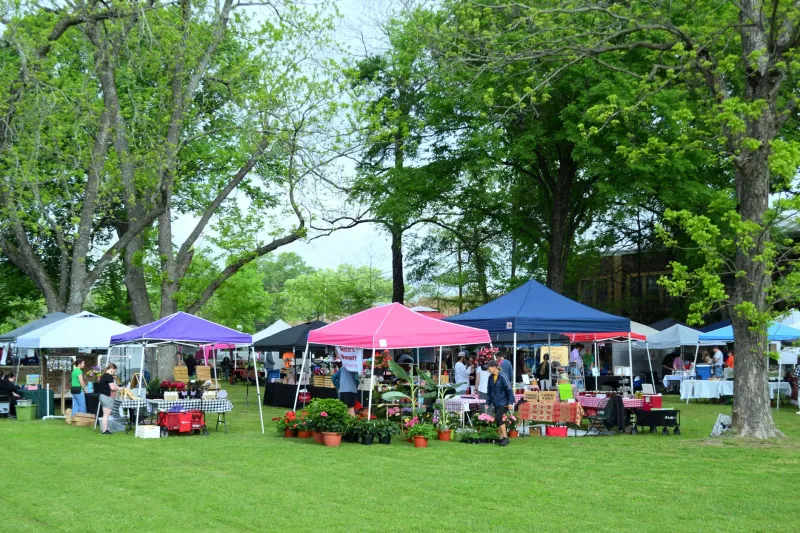
For residents who want to make the most of what Robertsonville's growers have to offer, the key is showing up regularly and asking questions. Farmers markets — when they're running — are the most direct connection point. But plenty of local producers also sell through farm stands, community-supported agriculture (CSA) subscriptions, and even social media pages where they post what's available each week.
If you haven't looked into a CSA share before, it's worth exploring. You pay upfront for a season's worth of produce, and each week you pick up (or receive) a box of whatever's fresh. It's a commitment, but it's also one of the most direct ways to support a local farm financially — especially early in the growing season when cash flow matters most.
The Economic Ripple Effect
Here's something that doesn't get talked about enough: when you buy food from a Robertsonville producer, a much larger share of that money stays in the local economy compared to buying from a national chain.
Studies on local food economies consistently show that locally owned businesses recirculate a higher percentage of revenue within their communities — through wages paid to local workers, supplies purchased from nearby vendors, and spending by business owners who themselves live in town. It's called the local multiplier effect, and it's real.
For a town like Robertsonville, that means every farmers market purchase, every CSA subscription, and every restaurant meal made with locally sourced ingredients is doing double duty. You're getting food and you're investing in the place you live.
Small food businesses also tend to be significant local employers, especially for part-time and seasonal work. A mid-sized farm might employ several workers during harvest. A local bakery or food production operation might provide steady jobs for a handful of residents year-round. These aren't headline-grabbing numbers, but they add up — and they matter to real families in this community.
Challenges Worth Acknowledging
It would be easy to paint this picture as entirely rosy, but local producers face real obstacles. Land costs, labor shortages, unpredictable weather, and the difficulty of competing on price with large distributors are constant pressures. Many small farms operate on thin margins, and one bad season can be genuinely devastating.
There's also the challenge of visibility. A lot of residents simply don't know what's available locally, or they assume it's too expensive or too inconvenient. Sometimes that's true — but often it isn't, especially when you factor in quality, freshness, and the satisfaction of knowing exactly where your food came from.
Building awareness is something the whole community can participate in. Word of mouth still matters enormously for small producers. Leaving a positive review, sharing a post on social media, or just telling a friend about a farm stand you discovered goes a long way.
How to Plug In
If you're ready to make local food a bigger part of your life, here are a few practical starting points:
- Check for seasonal farmers markets in and around Robertsonville — schedules often shift year to year, so a quick search or a look at community boards can point you in the right direction.
- Ask at local restaurants whether they source from nearby farms. Many are happy to talk about their suppliers, and supporting those spots is an indirect way of supporting producers.
- Look for CSA listings from farms in the area — spring is typically when sign-ups open, so it's worth getting on a mailing list.
- Visit farm stands directly when you can. A lot of producers sell right on their property, and that's often where you'll find the best prices and the freshest product.
- Follow local food producers on social media — many use Facebook or Instagram to announce availability, pop-up sales, and seasonal offerings.
Robertsonville's local food producers aren't asking for charity. They're running businesses and doing good work. What they need — and what they deserve — is a community that knows they exist and chooses to show up.
That part's on us.